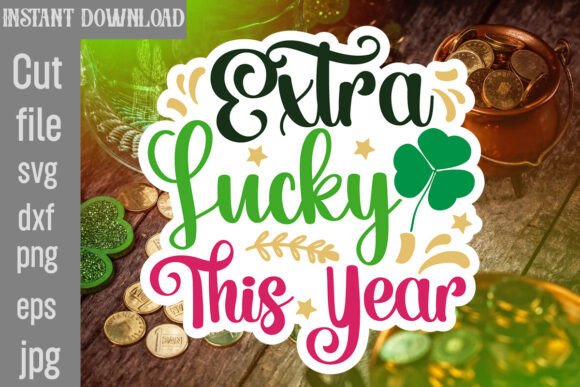
Reviewing the Extra Lucky This Year SVG Cut File
As a designer who spends half my life digitizing patterns and the other half testing them on actual fabric, I have learned to be skeptical of cute graphics until I see how they hold up under the needle. The Extra Lucky This Year SVG Cut File caught my eye not just for its playful theme, but for its potential versatility in the current market. Whether you are an Etsy seller looking to refresh your spring inventory or a hobbyist making personalized gifts, understanding how a digital asset translates into a tactile handmade product is crucial. This review breaks down the practical realities of using this design in real-world embroidery projects.
First Impressions and Visual Personality
When I first opened the zip file, I was looking for clean lines and balanced proportions. The Extra Lucky This Year SVG Cut File delivers a whimsical yet structured aesthetic. It feels celebratory without being overly cluttered, which is a significant advantage for embroidery. In the world of Crafts and Graphics, simplicity often translates better to stitch than complexity. The layout suggests a design that relies on strong silhouettes rather than intricate internal detailing. This is a good sign for durability. A design that is too dense can puckers fabric, while one that is too sparse might look unfinished. This particular graphic strikes a middle ground that feels approachable for both beginners and seasoned professionals.
The mood is undeniably upbeat. It evokes feelings of fresh starts, good fortune, and celebration. This makes it a natural fit for New Year’s promotions, birthday commissions, or general "good vibes" apparel. However, as a reviewer, I look past the sentiment to the mechanics. How will those curves translate to thread? Will the text remain legible at smaller sizes? These are the questions that determine whether a file is merely pretty or truly functional.
Real-World Application: The Tote Bag Test
To evaluate the Extra Lucky This Year SVG Cut File properly, I imagined a specific scenario: a custom canvas tote bag for a local boutique. Canvas is a sturdy, textured fabric that can be unforgiving if a design is not optimized. I visualized placing this graphic centrally on the bag. Because the design includes both graphical elements and likely some typography, contrast becomes key. On a natural beige canvas, I would recommend using deep, saturated thread colors like emerald green, navy, or burgundy to ensure the design pops.
If I were stitching this as a sweatshirt embroidery project, the approach would shift. Sweatshirts have a looped texture that can swallow fine details. Here, the bold nature of the Extra Lucky This Year SVG Cut File works in its favor. I would avoid using a running stitch for the main outlines if the digitization allows for adjustment, opting instead for a slightly wider satin stitch or a light fill stitch to ensure visibility against the fuzzy background. For a personalized gift, such as a baby onesie, the scale would need to be reduced significantly. This is where caution is required. If the original vector has very thin lines, shrinking it for baby embroidery might cause the stitches to merge or break. Always check the minimum viable size before committing to a final hoop.
Navigating Fabric and Hoop Constraints
One of the most critical aspects of using any digital embroidery file is understanding its limitations on different surfaces. The Extra Lucky This Year SVG Cut File is provided in SVG, DXF, EPS, and PNG formats. While these are standard for cutting machines and print-on-demand services, using them for machine embroidery requires an extra step: digitization or conversion. If you are using this as a cut file for appliqué, the process is straightforward. You would cut the shape from contrasting fabric and use a applique design stitch pattern to secure it. This method is excellent for reducing stitch density on thick garments like jackets or hoodies.
However, if you are planning to stitch the design directly onto fabric, you must consider the hoop size. Large, continuous designs can distort lightweight fabrics. I strongly advise using a high-quality cut-away stabilizer for knit fabrics like t-shirts and a tear-away stabilizer for woven cottons. For curved surfaces like caps or hats, the design’s width must fit within the cap frame without encroaching on the seams. The horizontal spread of this particular graphic seems moderate, making it a candidate for front-panel cap embroidery, provided the height does not interfere with the brim attachment.
Dark fabrics present another challenge. If you are stitching on black or navy, you cannot rely on the fabric color to define edges. You may need to add an underlay stitch or choose thread colors with high luminance contrast. Testing the design on scrap fabric is non-negotiable. What looks crisp on a screen can look muddy if the tension is off or if the thread sheen reflects light unexpectedly.
Commercial Viability and Brand Consistency
For small shop product creators and craft business owners, consistency is brand currency. The Extra Lucky This Year SVG Cut File offers a cohesive look that can be integrated into a broader collection. Imagine pairing this design with matching motifs for a seasonal bundle. This increases the perceived value of your Etsy listings and encourages bulk purchases. When customers see a professional, well-executed finished product, their trust in your brand grows.
It is important to note that this is a DIGITAL DOWNLOAD ONLY. The package includes one .zip file with an SVG for Cricut, a DXF for Silhouette, an EPS Vector, and a PNG with a transparent background at 300 DPI. These formats are ideal for creating printable mockup assets for your online store. You can place the PNG on virtual product images to show customers what the final item could look like without stitching a single sample. This saves time and materials during the marketing phase. However, always confirm licensing terms before selling finished items. Most designers allow commercial use for physical products, but restrictions may apply to reselling the digital file itself.
Practical Designer Notes for Best Results
Before you load this design into your workflow, keep these technical checks in mind:
- Test on Scrap Fabric: Never stitch a new design directly on your final garment. Use a similar weight and texture scrap to check for puckering or thread breaks.
- Check Thread Contrast: View the design in grayscale. If the elements blend together, adjust your thread palette to ensure distinct separation between layers.
- Inspect Small Details: Zoom in on the EPS or SVG file. Are there any anchor points or nodes that look erratic? Clean up any unnecessary vectors before converting to an embroidery format.
- Verify Hoop Size: Measure the design dimensions against your machine’s maximum hoop capacity. Leave at least one inch of margin around the design for stability.
- Consider Washability: If the final item is a kitchen towel or frequent-wear apparel, ensure the stitch type is durable. Satin stitches can snag; fill stitches are generally more robust for high-friction areas.
In conclusion, the Extra Lucky This Year SVG Cut File is a versatile asset for the modern maker. It bridges the gap between digital precision and handmade charm. By respecting the material constraints and preparing your files correctly, you can transform this simple graphic into a standout piece of custom apparel or decor. Whether you are creating an embroidered patch for a jacket or a festive pillow cover, this design offers a solid foundation for creative expression. Treat it with the technical care it deserves, and it will reward you with professional-looking results that delight your customers.