Reviewing My First St. Patrick s Day SVG Cut File
As a designer who spends more time staring at stitch maps than actual fabric, I have learned that not every cute graphic translates well into thread. When I first pulled My First St. Patrick s Day SVG Cut File from my digital library, my initial reaction was cautious optimism. We see thousands of holiday-themed assets flood the market every February, but few are built with the structural integrity required for a high-quality embroidery project. This review breaks down how this specific asset holds up when moved from the screen to the hoop, focusing on its viability for real-world Crafts and commercial applications.
First Impressions and Visual Personality
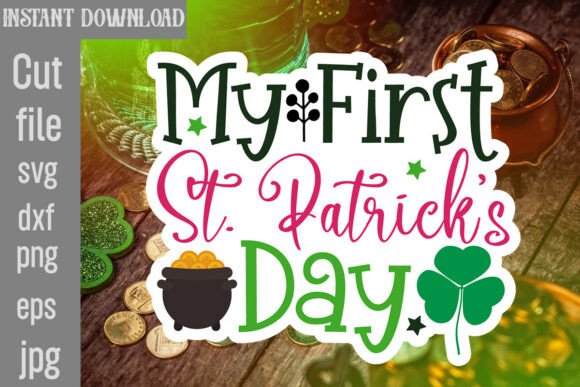
The immediate appeal of My First St. Patrick s Day SVG Cut File lies in its simplicity. In the world of Graphics, less is often more, especially when dealing with seasonal motifs that need to read clearly from a distance. The design features clean lines and a balanced layout that suggests a playful yet polished aesthetic. It does not rely on overly intricate details that might get lost in translation, which is a common pitfall for beginner-friendly holiday designs.
The mood is undeniably cheerful, capturing the whimsical spirit of the holiday without resorting to cliché clutter. For an embroidery designer, this visual clarity is crucial. It means the design has the potential to look professional on a variety of substrates, rather than appearing as a messy afterthought. The shape and theme lend themselves naturally to items meant for children or casual wear, where a light-hearted touch is expected and appreciated.
Real-World Application: The Tote Bag Test
To truly evaluate a design, you must imagine it in situ. I recently considered using this file for a custom tote bag design intended for a local boutique’s spring collection. The scenario was straightforward: a canvas tote featuring the motif, paired with vibrant green and gold threads. Because the file includes a transparent PNG at 300 DPI, I was able to create a realistic printable mockup quickly to show the client before committing to digitizing or stitching.
The result was promising. The design’s proportions fit comfortably within a standard 5x7 hoop, making it ideal for sweatshirt embroidery as well. If you are an Etsy seller or run a small shop product line, this versatility is a major selling point. It allows you to offer the same design across multiple product types—custom apparel, kitchen towels, and even baby embroidery items like onesies or bibs—without needing to drastically alter the scale.
Navigating Fabric and Stitch Challenges
While the visual appeal is strong, practical execution requires attention to detail. Since this is provided as an SVG, DXF, EPS, and PNG, it is primarily a cut file format. For those of us in the embroidery niche, this means we are likely using these vectors as a reference for manual digitizing or tracing into our embroidery software. This step is critical. You cannot simply import an SVG into most embroidery machines and expect a perfect machine embroidery design.
When adapting My First St. Patrick s Day SVG Cut File for stitching, pay close attention to stitch density. Holiday designs often feature solid shapes that can become dense blocks of thread if not managed correctly. On stretchy fabrics like jersey knits used for t-shirts, excessive density can cause puckering. I recommend using a appropriate stabilizer and considering a mix of fill stitch and satin stitch borders to keep the weight down while maintaining definition.
Additionally, be cautious with small details. If the design includes tiny elements, they may not hold up well on textured fabrics like terry cloth or waffle weave. In such cases, simplifying the design or increasing the size is necessary to ensure the finished product looks crisp. For dark fabrics, ensure your thread colors have enough contrast. A underlay stitch in white or light gray can help pop the colors and prevent the fabric from showing through the stitches.
Commercial Viability and Brand Consistency
For commercial embroidery professionals and craft business owners, consistency is key. Using a well-structured base file like this helps maintain brand quality. Customers trust handmade items that look intentional and well-executed. A sloppy stitch-out can damage your reputation, whereas a clean, well-digitized version of this design can enhance your perceived value.
This asset works particularly well for personalized gift markets. Imagine adding a name below the motif for a holiday embroidery special. The clean lines of the SVG make it easy to align text and create a cohesive look. Whether you are creating an embroidered patch for a jacket or decorating a cap, the scalability of the vector files (SVG, EPS) ensures you can resize without losing quality, a significant advantage over raster-only images.
Practical Designer Notes for Best Results
Before you launch this design into your production line, consider these practical steps to ensure success:
- Test on Scrap Fabric: Always stitch out a test sample on the same material you plan to use for the final product. This helps you identify any tension issues or registration errors.
- Check Thread Contrast: View your design in black and white to ensure the shapes are distinct. If elements blend together, adjust your thread choices or add outlining stitches.
- Verify Hoop Size: Confirm that your chosen hoop size accommodates the design with enough margin for stabilization. A 4x4 hoop might be too tight for some variations, so a 5x7 is often safer.
- Inspect Small Details: Zoom in on the vector file to check for anchor points or nodes that might cause jagged edges when converted to stitches. Smooth these out in your digitizing software.
- Confirm Licensing: While this is a digital download, always double-check the license terms for commercial use. Ensure you are compliant when selling design assets or finished goods derived from them.
Final Verdict on Usability
My First St. Patrick s Day SVG Cut File is a solid addition to any designer’s library, provided you understand its role as a foundational graphic rather than a ready-to-stitch file. Its strength lies in its clean, adaptable nature, making it suitable for a wide range of handmade product categories. From apron decorations to pillow cover accents, the design offers a festive touch that resonates with customers looking for seasonal charm.
For the creative entrepreneur, this file represents an opportunity to create diverse inventory with minimal design overhead. By taking the time to properly digitize and test the motif, you can transform a simple SVG into a high-value custom apparel item or a cherished personalized gift. The key is respecting the technical requirements of embroidery while leveraging the artistic simplicity of the source file. With careful attention to fabric texture and stitch planning, this design can undoubtedly elevate your spring collection and delight your buyers.