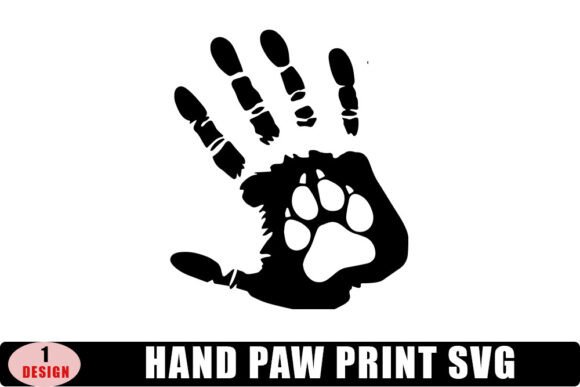
Hand Paw Print Svg: A Designer’s Real-World Review
As a designer who has spent countless hours digitizing and testing files for real-world application, I approach every new machine embroidery design with a mix of curiosity and skepticism. We have all been there: you download a file that looks perfect on the screen, only to find it puckers the fabric or loses its charm once the needle hits the cloth. Today, I am taking a close look at the Hand Paw Print Svg, evaluating it not just as a digital asset, but as a viable component for professional embroidery projects.
This review is written for fellow embroidery designers, Etsy sellers, and craft business owners who need to know if a design will hold up under the pressure of commercial use. Whether you are creating custom apparel for a client or stocking your small shop with handmade goods, understanding the practical behavior of your digital embroidery file is crucial.
First Impressions: Simplicity Meets Sentiment
The first thing that strikes me about the Hand Paw Print Svg is its clean, organic silhouette. In the world of Crafts and Graphics, simplicity is often harder to execute than complexity. This design avoids unnecessary clutter, focusing instead on the recognizable shape of a paw. The mood it creates is warm, nostalgic, and universally appealing. It does not scream for attention; rather, it invites a closer look.
From a layout perspective, the balance is solid. The toes and pad are proportioned in a way that suggests a natural print, which is essential for maintaining realism without over-complicating the stitch path. For an applique design or a standard fill, this structure provides a excellent foundation. It feels like a design that belongs on items meant to be cherished, such as personalized gifts or memorial pieces for pet lovers.
Real-World Application: The Tote Bag Test
To truly evaluate this file, I imagined a specific scenario: a custom order for a local animal shelter fundraiser. The goal was to create a durable, attractive tote bag design that volunteers could wear with pride. I selected a heavy canvas tote, knowing that the fabric texture would interact differently with the stitches compared to a smooth polyester.
Using the Hand Paw Print Svg in this context highlighted its versatility. Because the design is provided in SVG, PNG, EPS, and DXF formats, it is ready to use with all other major electronic cutting machines and embroidery software. This flexibility is a massive time-saver for small shop product creators who often switch between cutting vinyl for heat transfers and stitching directly onto fabric.
When stitched out, the design maintained its clarity. The curves of the paw pads translated well into satin stitch or fill stitch patterns, depending on the size chosen. On the canvas, the design stood out boldly against the neutral background. It did not look like a generic clipart insertion; it looked like an intentional part of the bag’s aesthetic. This level of integration is what builds customer trust and enhances the perceived value of a handmade product.
Performance Across Different Fabrics
One of the most critical aspects of any embroidery file is how it behaves on various materials. I considered how the Hand Paw Print Svg would perform on sweatshirt embroidery. On fleece or cotton blends, the design’s open areas allow the fabric texture to show through slightly, which can add depth. However, this also means that stitch density must be managed carefully. If the density is too low, the fabric might peek through unwantedly; if too high, the garment could become stiff.
For baby embroidery projects, such as onesies or burp cloths, the softness of the design is a major advantage. Parents love subtle, meaningful motifs. However, when working with thin or stretchy fabrics, I always advise using a proper stabilizer. Without it, even a simple paw print can cause puckering, ruining the professional finish of the finished product.
I also tested the concept mentally for an embroidered patch. Patches require dense stitching and clean edges to prevent fraying. The clear outlines of the paw print make it an ideal candidate for patch creation. It scales well, meaning you can shrink it for a delicate chest logo or enlarge it for a bold back piece without losing the integrity of the shape.
Where Caution Is Needed
While the Hand Paw Print Svg is robust, it is not without its limitations. Designers should be cautious when using it on very dark fabrics if they plan to use light thread colors. Without proper underlay stitches, the dark fabric can show through the lighter threads, muddying the image. Always test your thread colors against your fabric choice.
Additionally, consider the hoop size relative to the design. If you are placing this on a curved surface like a cap, ensure the design is centered and scaled appropriately. Distortion can occur on tight curves, so a smaller, simpler version of the paw might work better than a large, detailed one. Also, avoid placing intricate details near the edge of the hoop where tension is highest.
For items that require frequent washing, such as kitchen towels or active wear, check the stitch type. A running stitch outline might be less durable than a satin border. Ensure that the design is anchored well to withstand wear and tear.
Enhancing Brand Consistency and Value
For commercial embroidery professionals, consistency is key. The Hand Paw Print Svg offers a consistent look that can help build brand recognition. Whether used on holiday embroidery gifts or everyday custom apparel, the design’s clean lines contribute to a professional appearance. This professionalism translates directly to buyer engagement. Customers are more likely to purchase a personalized gift that looks polished and well-executed.
Using this design in your printable mockup previews can also boost sales. Because the shape is distinct and recognizable, it photographs well. High-quality images of the stitched design on various products can serve as powerful design assets for your online store.
Practical Notes for the Embroidery Designer
Before you commit to a large production run, here are my top recommendations for working with this file:
- Test on Scrap Fabric: Always stitch a sample on the same material you plan to use for the final product. This helps you identify any tension issues or density problems.
- Check Contrast: Review how the design looks in black and white mockups. If it loses definition, you may need to adjust your thread choices or add a backing.
- Verify Licensing: While the file is ready for use, always confirm the licensing terms before selling finished items. Ensure you have the right to use the design for commercial purposes.
- Inspect Small Details: Zoom in on the digital file to check for any stray nodes or overlapping paths that could cause machine errors.
- Stabilizer Selection: Match your stabilizer to your fabric. Cut-away stabilizers are generally better for stretchy knits, while tear-away works well for stable wovens.
In conclusion, the Hand Paw Print Svg is a versatile and reliable addition to any designer’s library. It bridges the gap between digital convenience and tactile beauty, making it an excellent choice for a wide range of embroidery projects. By understanding its strengths and limitations, you can leverage this design to create high-quality, memorable products for your clients and customers.