Custom Football Player Svg: A Designer's Field Test
When I first pulled up the Custom Football Player Svg on my screen, I wasn't looking at it as just another digital asset in the vast world of Crafts and Graphics. I was looking at it through the lens of a maker who has to stand behind their work when a customer asks, "Will this wash out?" or "Can you put this on a toddler's onesie?" In our line of work, a pretty picture on a monitor is only half the battle; the real test happens under the needle. This review breaks down how this specific design holds up when translated from a vector file into a tangible, stitched reality.
First Impressions: Silhouette and Flow
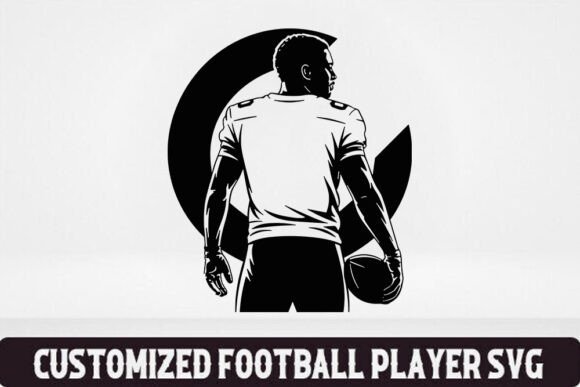
The immediate thing that strikes me about the Custom Football Player Svg is its clean silhouette. In the realm of machine embroidery design, complexity can be a double-edged sword. Too many details, and you lose definition on smaller items; too few, and the subject becomes unrecognizable. This design strikes a solid balance. The posture of the player suggests motion and energy without relying on intricate facial features or tiny equipment details that often turn into thread blobs after a few washes.
Visually, it carries a sporty, dynamic mood. It feels right at home on custom apparel intended for game day, but it's versatile enough for nursery decor where parents want to hint at future athletic dreams without overwhelming the space. As a digital embroidery file, the lines appear smooth in the preview, which usually translates well to satin stitches or clean fill areas, depending on how you digitize it or if it comes pre-digitized for specific hoop sizes.
The Real-World Stitch Test: A Sweatshirt Scenario
To truly evaluate this embroidery project, I imagined a common request I get every autumn: a personalized sweatshirt embroidery job for a high school senior. The client wants their child's number and name paired with a graphic. Here is where the Custom Football Player Svg shines. Because the shape is distinct, it works beautifully as a large back print or a chest logo.
If you are using this for a tote bag design, the open spaces within the vector allow the fabric texture to breathe, preventing the dreaded "cardboard effect" where the fabric becomes stiff and unyielding due to excessive stitch density. However, if you are converting this SVG into a stitch file yourself, pay close attention to the edges. A running stitch border might look sketchy and artistic on a linen tea towel, but for a finished product meant for heavy wear, a tight satin column or a well-planned fill stitch will ensure longevity.
I also considered how this would look as an embroidered patch. The bold outlines of the player make it an excellent candidate for a merrowed edge patch. The simplicity of the form ensures that even when scaled down to a 2-inch diameter for a cap or a backpack, the figure remains identifiable as a football player rather than a vague smudge of thread.
Navigating Fabric Challenges and Hoop Constraints
Every designer knows that the perfect file can go wrong on the wrong material. When working with the Custom Football Player Svg, you need to be strategic about your substrate. On stretchy fabrics like jersey knits used for baby embroidery, the stability of the design is paramount. You must use a high-quality cut-away stabilizer to prevent the stitches from puckering the fabric over time. The dynamic pose of the player means there are directional stresses in the stitching; if the stabilizer isn't up to the task, the legs or arms of the figure could distort.
Curved surfaces present another hurdle. If you are applying this to a structured cap, the curvature can compress the design vertically. The Custom Football Player Svg has a relatively standard aspect ratio, but on a deep-crown hat, you might need to adjust the scaling slightly to ensure the player doesn't look squashed. Furthermore, dark fabrics require careful selection of thread colors. While the SVG format allows for easy color swapping in your editing software, remember that metallic or variegated threads might obscure the clean lines of the player's uniform. Stick to high-contrast solids for the best readability.
Small Details Matter
One area requiring caution is the potential for small, isolated elements depending on how the SVG paths are constructed. If the design includes a separate football or specific gear details that are not welded to the main body, these can become "jump stitches" or loose threads if not managed correctly in your embroidery software. Always inspect the pathing before sending it to the machine. For commercial embroidery runs, consistency is key, so ensuring those paths are optimized saves time on trimming later.
Commercial Viability and Brand Consistency
For the Etsy seller or the owner of a small shop product line, the Custom Football Player Svg offers strong commercial potential. It fits seamlessly into seasonal collections, particularly for holiday embroidery gifts during the football season or back-to-school rushes. The professional look of the silhouette elevates the perceived value of the handmade product. Customers are willing to pay a premium for items that look crisp and professionally executed, and this design supports that level of quality.
However, before listing this as a printable mockup or selling the physical embroidered item, you must verify the licensing terms included in the zip file. The package contains SVG, PNG, EPS, and DXF formats, making it ready for various major electronic cutting machines and embroidery software. But does the license allow for unlimited sales of finished goods? Is there a cap on the number of physical items you can produce? These are critical questions for any creative entrepreneur. Never assume; always read the fine print to protect your craft business.
Final Verdict: A Solid Starter for Sports Collections
In conclusion, the Custom Football Player Svg is a robust addition to any designer's library. It bridges the gap between decorative flair and functional durability. Whether you are creating a personalized gift for a coach, whipping up a batch of team spirit aprons for a tailgate party, or designing a new line of boutique baby wear, this graphic provides a reliable foundation.
My advice is to treat it as a flexible component. Test it on scrap fabric first to gauge the stitch density against your specific machine's tension settings. Play with thread colors to see how it pops against navy blues, forest greens, and classic whites. By approaching this design asset with a critical eye and a practical mindset, you can transform a simple vector file into a standout piece that customers will cherish. It's not just about the file format; it's about the confidence you have in the final stitch.